Hey, I’m Liam.
I’m a solutions engineer at a fintech company, where I help Tier 1 banks build integrations for finance products. Outside work I’m having fun with AI, and these are some of the pieces I’ve built, with the stories behind them.
Nine projects, in the six kinds of thing I keep making. Open a story for the why, or “How it works” for the parts.
Bots that run on paper, to find out where I know more than the price. The only group whose output is a judgement rather than a thing.
It belongs here if it could be wrong and I’d learn something.
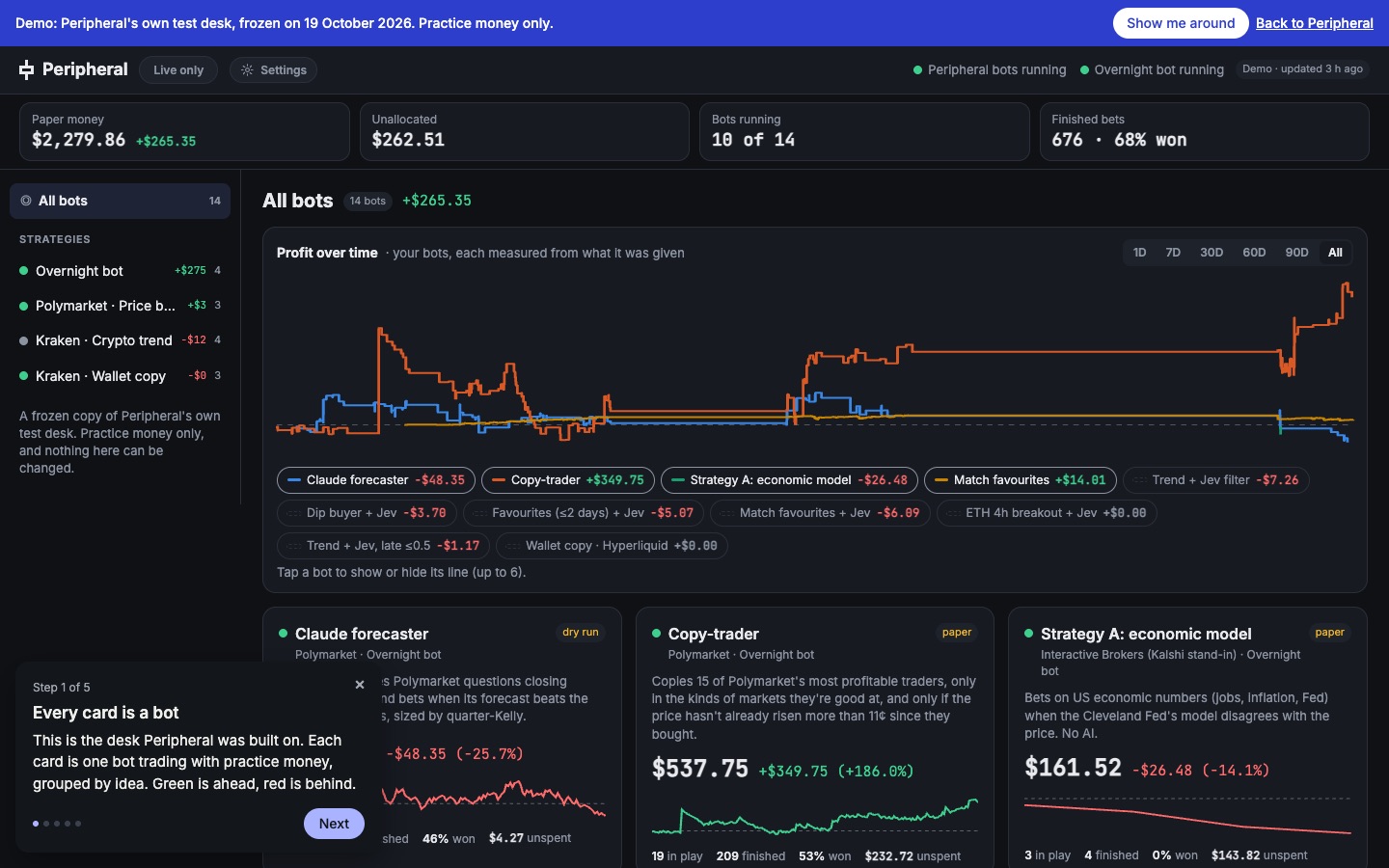
A workshop for copying, tweaking and battle-testing trading bots with practice money.
Try the demoCopy-trader bots were popping up all over Twitter, and my first reaction was: can this possibly be real? It looked like a real case of selling the shovels. Curiosity got the better of me. I didn’t want to waste a hundred real dollars finding out, so I pulled some of the strategies into Claude and built a paper-trading bot instead.
I started by testing my own edge. I figured I knew something the market didn’t, so I built a heuristic tester. It mixed real settled Polymarket markets with some made-up ones, to see if my calls lined up with the market. Turns out I haven’t a clue what’s happening in the Brazilian elections. It was fun for a while.
Then I copied a bunch of strategies from Twitter and Reddit. They weren’t all great. Picking the right strategy is why algo traders get paid a lot of money.
So I tried copy trading, which I remembered from eToro, where you could follow open traders’ lines. But I didn’t want to copy one person. I wanted to copy the crowd, and find the gaps in Polymarket where the expected value was positive. That went really, really well compared to my other bots. At its peak it was up more than 600%, from 188 paper dollars to about $1,330. It’s given about half of that back since, and sits at $824: up 338% in 29 days.
And AI wasn’t making the trades. I analysed the data with AI and picked the approaches that looked positive, then AI spun up a few bots, but the bots themselves follow fixed rules. Afterwards we could review every trade, understand it and decide what to change.
With software this cheap to build, the experience is what matters, so I put real effort into the UI. And I really wanted to find a way to show a positive return from AI, even a theoretical one. Polymarket was recently banned in BC, so the bot stays on paper for now.
Playable arguments where the win condition is understanding: a topic broken into short rounds, an AI judge behind it, and the bar is whether I enjoy playing it.
If you could learn it faster from a video, it doesn’t belong here.
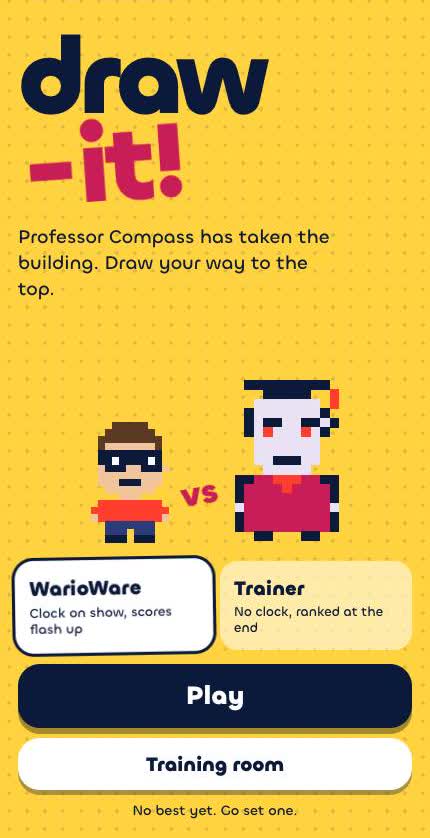
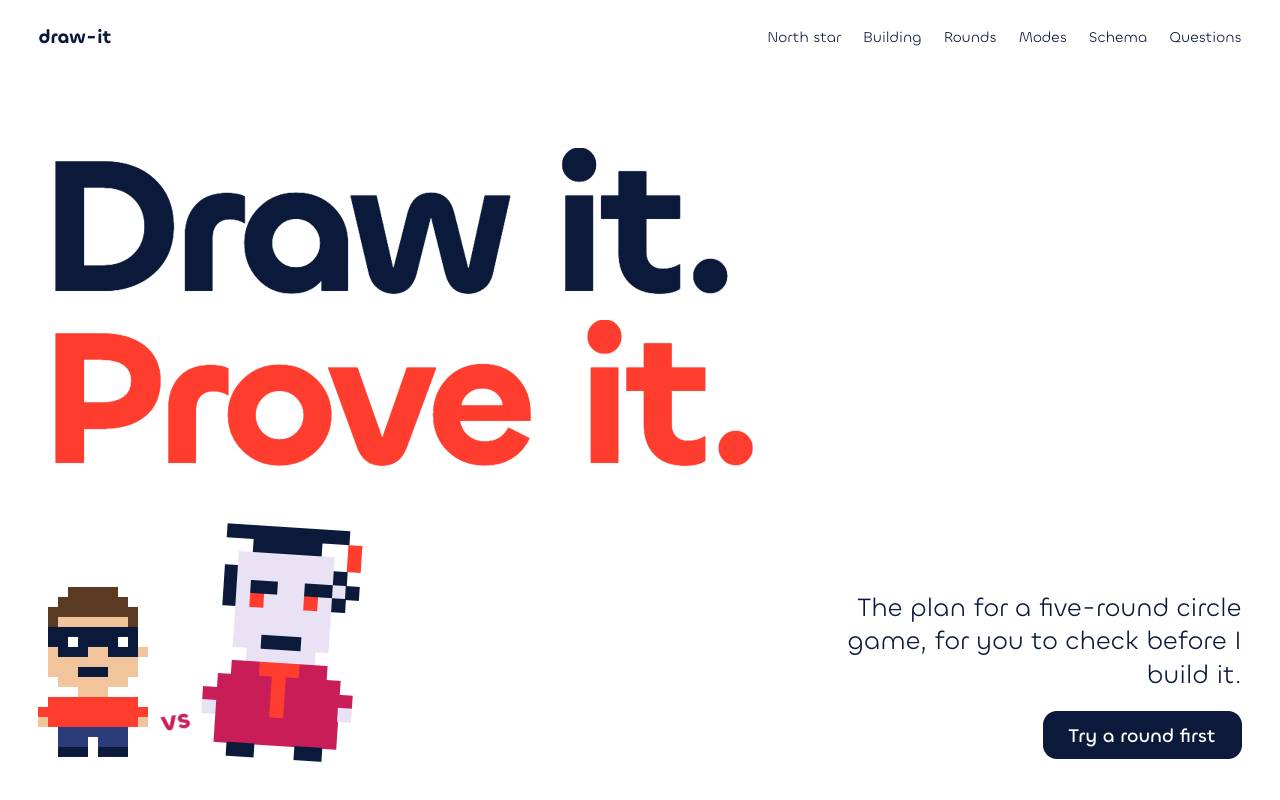
A maths game where you draw it to prove it. 3Blue1Brown, but you have to draw it yourself.
Work in progressI wanted 3Blue1Brown-style intuition from first principles, learnt fast and fun. It mixes Brain Training’s structure, Brilliant’s concepts and WarioWare’s bounce. Watching feels like understanding. Drawing proves it.
The feeling I’m after came from a podcast. Michael Stevens used Bilbo’s eleventy-first birthday to show his daughter that numbers are arbitrary, so maths isn’t a mean monster you have to submit to. It’s a tool we made, and you can handle it. And right now the real goal is that I like playing it.
It’s me, a little pixel character in glasses, climbing a building. On every floor there’s an evil professor, Professor Compass, asking questions. If I can’t draw pi in 30 seconds, the score goes into the negative, but it lets me finish.
The first version was phone-first, and drawing on a phone was hard. So it got pieces, like Lucidchart: a circle, a dot, lines and arcs you place instead of drawing freehand. It’s still hard to get right with my fingers, and 30 seconds isn’t a lot of time. That’s where it is.
It’s still very difficult to make an intuitive app without good design knowledge. So I’m working on making the design more intuitive, so people feel like they’re learning from first principles. My overall goal is WarioWare-level fun, for actual logic puzzles.
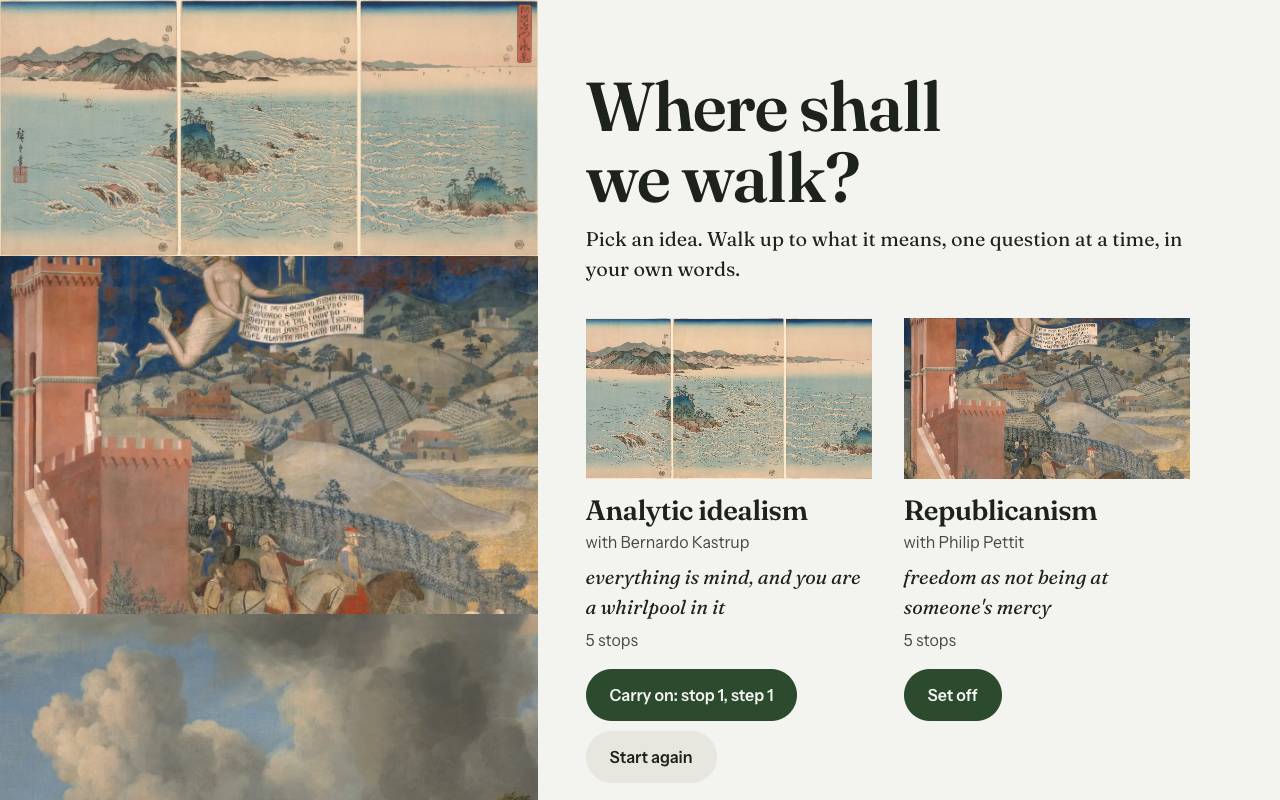
A calmer game that takes someone’s big idea, like Pettit on freedom or Kastrup on mind, and walks you to what it means, one question at a time, in your own words.
Early: I’m the only player so fardraw-it is the maths side. This is the other branch: can a game do the systems thinking I’m getting into? Something milder and calmer that walks you through big concepts until you get the feeling: oh, this is what this is. The way draw-it aims for: oh, pi is just that.
I started with the Essentia Foundation’s world, Bernardo Kastrup and analytical idealism. There are so many ideas they’re trying to put together, and a game could take you through them one at a time.
It’s not an influence machine. A game that builds a thought up step by step until you arrive at it yourself could push views, the way one media owner can. So the goal is understanding, not agreeing. If you think it through and go another way, that’s kept as a good outcome.
There are two ready-made walks so far, Pettit on freedom and Kastrup on idealism. There’s also a box where you paste a link to a talk, and it makes a walk from it.
It’s really solidified my understanding of philosophy, and it’s been a really enjoyable way to do it.
PS1-era games made for one person, usually to make a point they can’t argue with. The engine exists because the gifts kept needing it.
There is exactly one person who has to laugh.
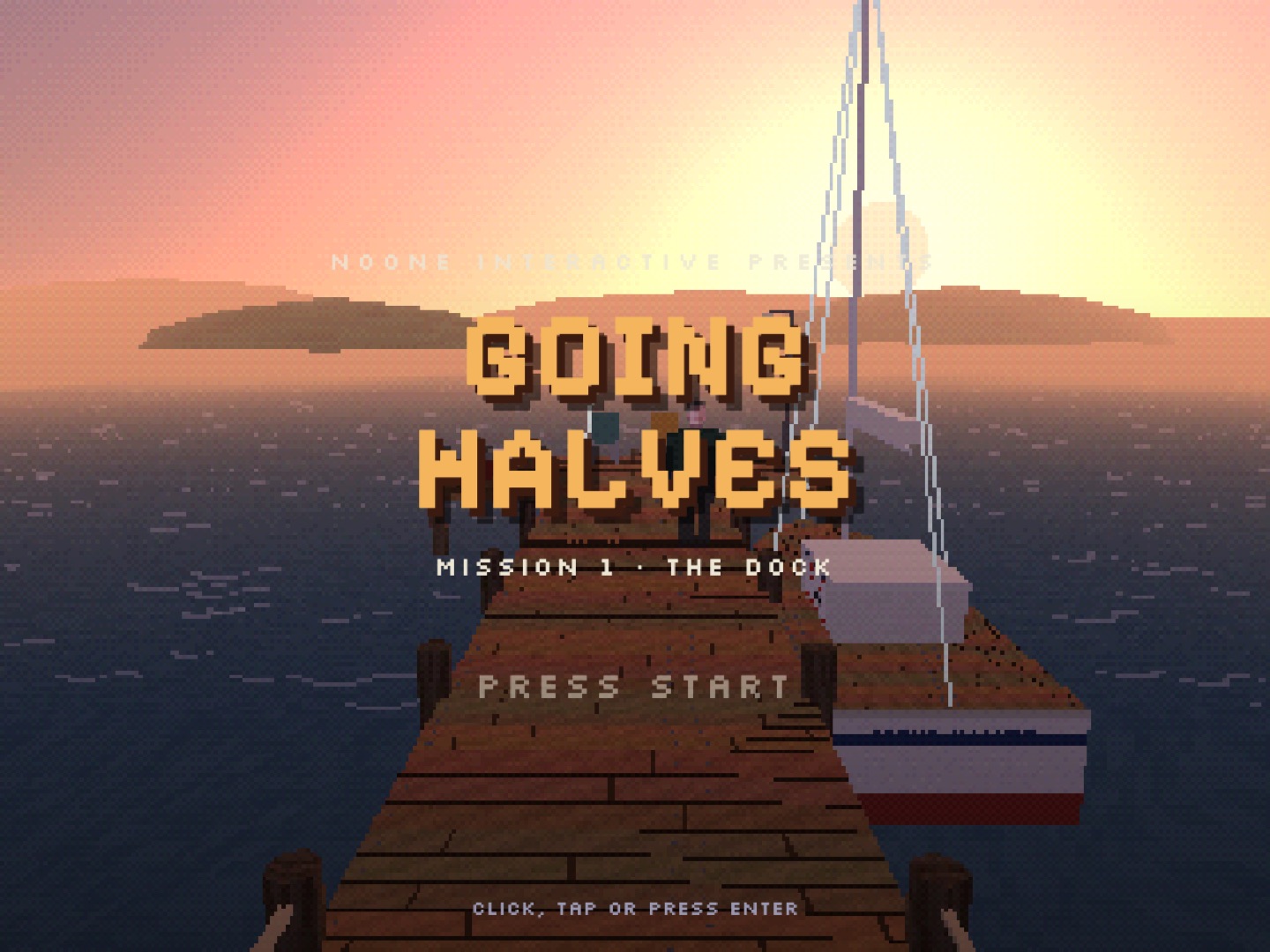
A PS1-style browser game engine where each game is just a script, settings and photos.
Play itI was bored on Marketplace, saw a boat and sent it to a friend. Let’s buy a boat. It’d be great fun sailing in BC, and it’d be easy. Being the more practical one, he said, "Absolutely not. That is the stupidest idea you’ve come up with this week."
So I leant into it. How do I get him to buy a boat with me? I made a little scene: imagine this is your life if you buy a boat with me. Drinking cans, fishing, even though neither of us knows how to fish.
I wanted to build something hyper-customised for one person, an experience only the two of us could really relate to. I think that’s a cool use of AI.
He still didn’t want to buy a boat. But other people have played it, and they laughed, and that’s been nice.
Right now it’s easier to build first and refine after, and to keep it really agile. This was the first project where I wrote a spec. I built it, played it over and over, fed my notes back in, rebuilt it and played it again.
The same habits, aimed at someone else. They have a login, and a login means someone else’s expectations.
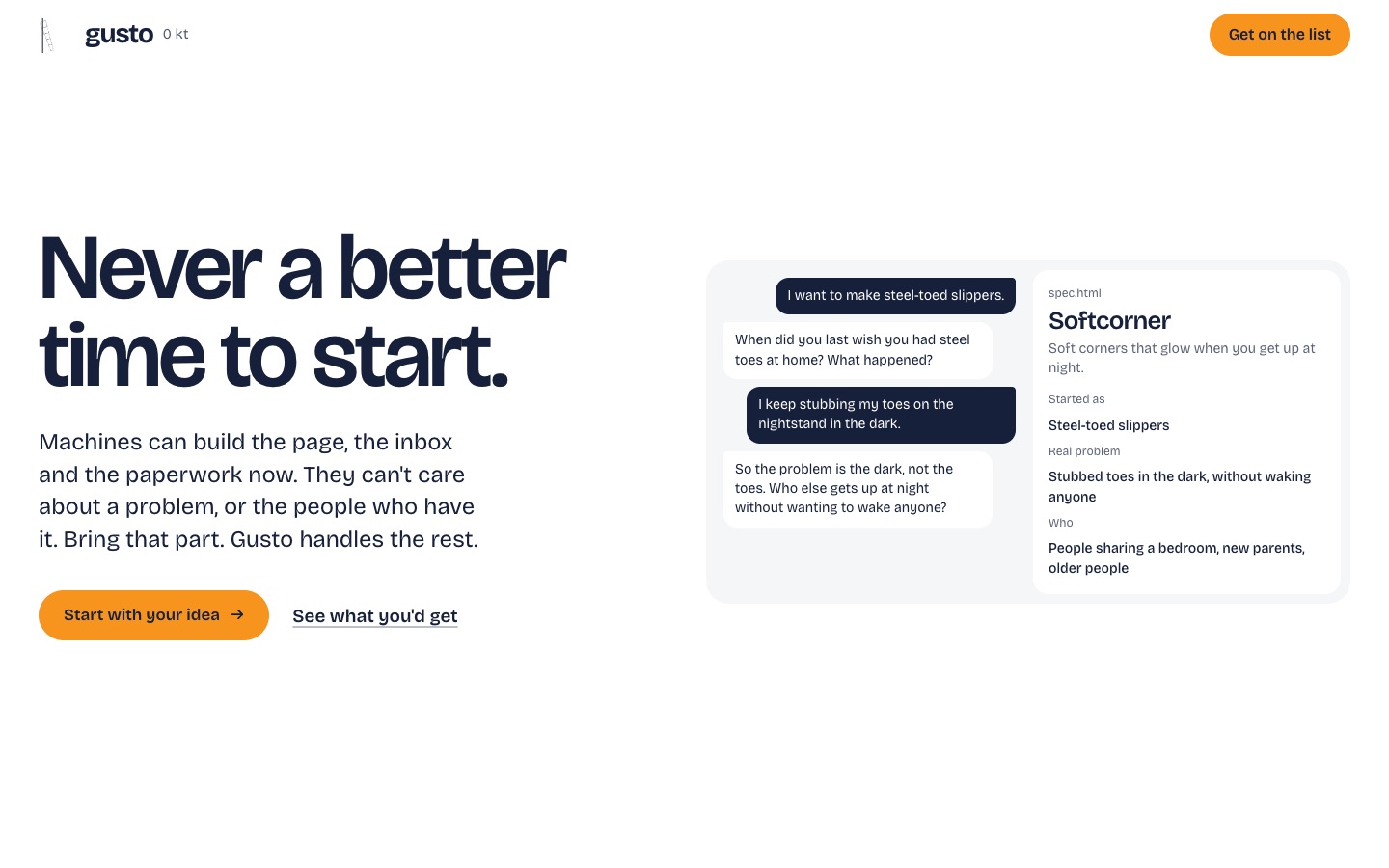
Talk an idea through, then get a small company set up around it.
Short oneSee the prototypeI noticed how quickly I could spin up ideas by talking to an LLM: find the problem, work out what the solution might look like, write a spec, build it and publish a page. So I wanted to push that further. What if I could get a whole company set up and go live in a day? The theory is that if you can solve one very specific problem, you should be able to spin up a company, put bots on it, and maybe earn some passive income from it. It’s software businesses spreading out to lots of small owners, rather than piling up in a few big ones.
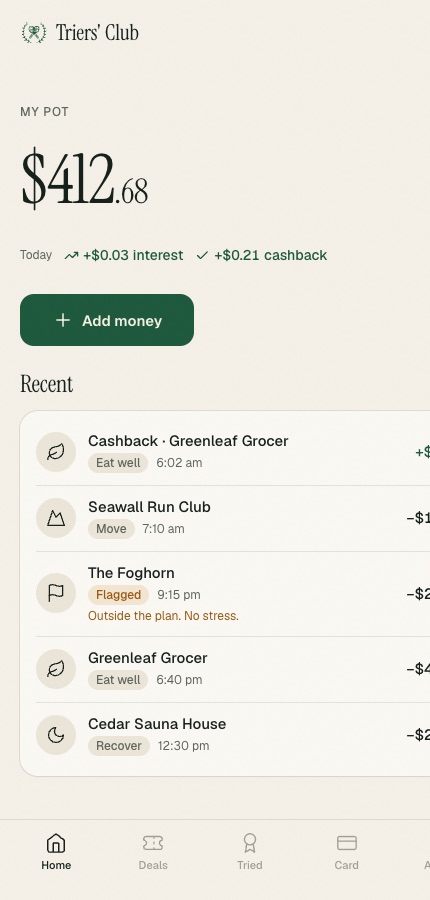
A debit card for exercise, healthy food and recovery. Your employer loads it, or you do, and local partners pay cashback into it.
Try the prototypeI was trying to work out my health spending account at work. When I looked at what I’d spent, it was mostly RMTs. Massages are great, but it was all reactive healthcare. I wanted to see if there was a proactive approach to employee health benefits.
That’s the goal of Triers’ Club: proactive, and all positive. I’d rather spend money on ski boots than on a visit to the physio. Ski boots aren’t covered by benefits today, even though they’ll do more for my longevity.
Same approach as the others. I worked through the problem, found my problem statement, built a page, went back and forth on it, and ended up with something I’m moderately happy with. There are still things to fix, but it pushes my thesis where I wanted it pushed.
AI design is still a long, long way from where I want it to be. That’s something to build on.
Things that run while I’m not there and come back with something: a price, a shortlist, the day’s birds.
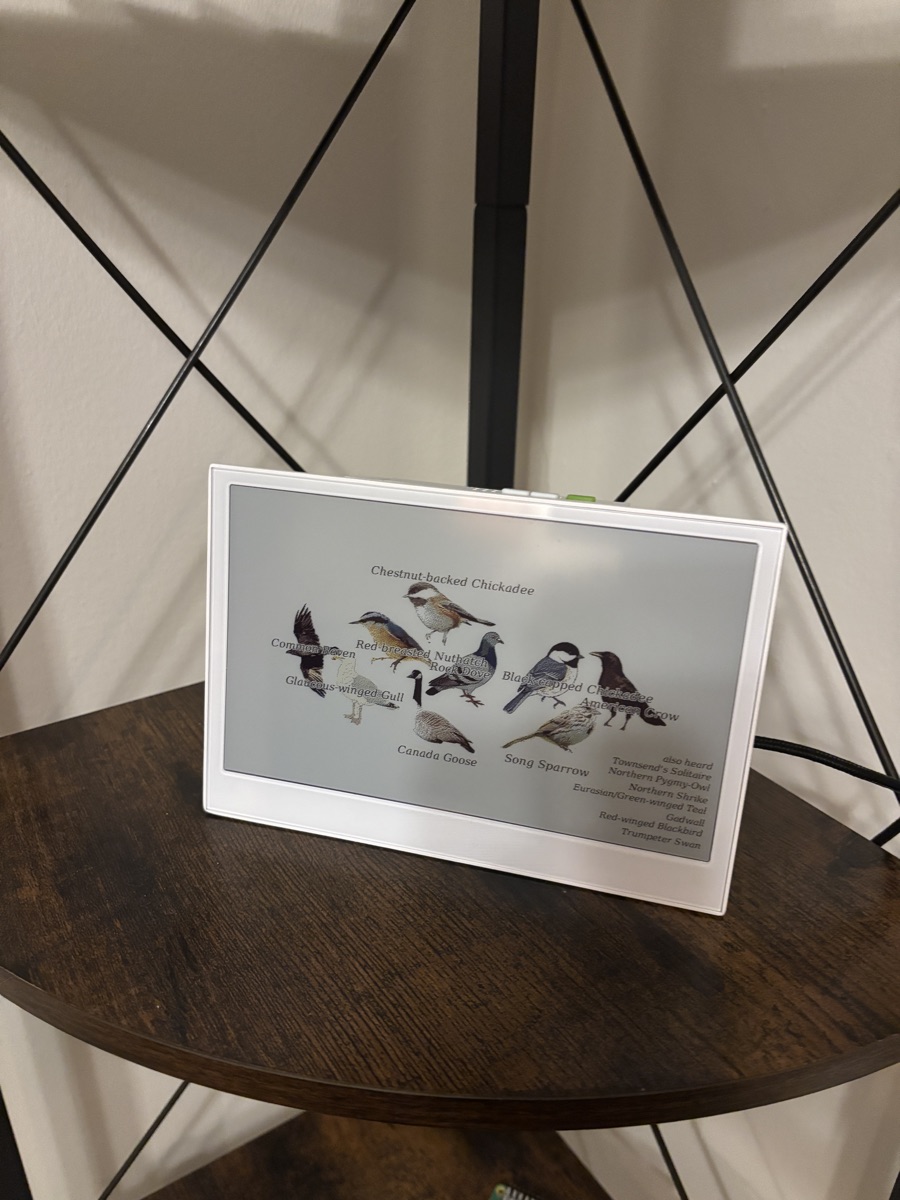
A Raspberry Pi that listens for birds and paints the day’s visitors onto a colour e-ink panel on my shelf.
The Pane was my first proper build. I saw someone else’s version online, a beautiful use of AI to tell you which birds were hanging around. After the nagging bot I wanted something less intrusive, and this was a perfect, gentle introduction to building with AI.
Two things. I realised how expensive hardware is. And I got my first real sense of how easy it could be to use AI to build tools and appliances that suit me, from the ground up, and how nice it felt to make my own apartment more enjoyable.
A bunch, mostly that I scope creep. Every time I opened the plan I’d say "wouldn’t it be cool if…"
I went from a Pi, a microphone and a display to an M2 Mac Studio running a local model with a single gateway to Claude: a behemoth of orchestration for a problem I didn’t have. I don’t mind turning the lamps off at night.
I spent more time on the spec than on the display.
I write no code. So the thing that most decides whether any of the above gets built well is the setup I direct it through, and that setup is a project too.
Fix the conditions, not the willpower.
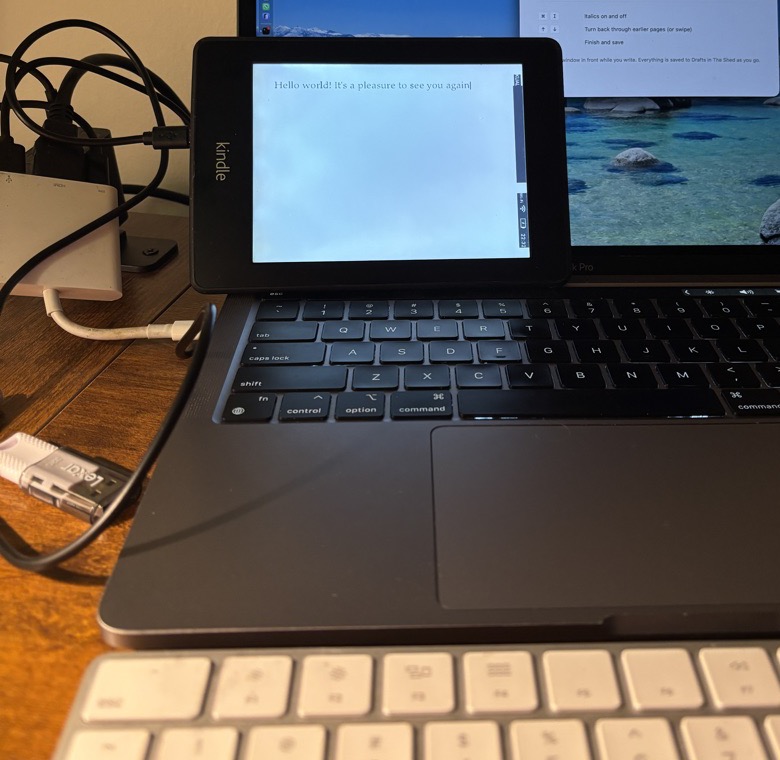
The same idea as the Zerowriter, made at home: the typewriter, made portable. Even if it isn’t what gets me writing, it’s an enjoyable build, and I’m certain I’ll admire the finished thing.
An old ThinkPad stripped to a text screen: a typewriter with a read-only scratch pad beside it.
Two reasons. I don’t write enough letters to my friends, and a typewriter would be a lovely way to do it. More importantly, I wanted to make a website, and if I did, I’d write personal essays on it. To write you need something to write on, with no distractions: a simple machine that reads my notes from my Obsidian vault and writes, and that’s it. I had an old ThinkPad that was perfect for the job. Such a nice keyboard.
It was OK. The point was to make me write, and I did. I also spent a day rebuilding a laptop in Linux, porting files and testing connections, instead of just opening a Google Doc. Today it’s a house server running the overnight Polymarket bots.
Sometimes to do a task you just need to do it. You don’t need to build a whole system around it. That took me straight to the games engine and the project pages: rather than think up and build a system, just start the task.
Build something first. Nothing comes out right in one shot. Build anything, then go back and iterate.
AI is an incredible software engineer. What it hasn’t got is taste: my sense of what looks right and what flows, and the why behind an idea. Here’s one back and forth, on draw-it.
“Build a small browser game… 3Blue1Brown, but you have to draw it yourself.”
“If I can’t draw pi in 30 seconds, just make it go into the negative. Let me finish it at least.”
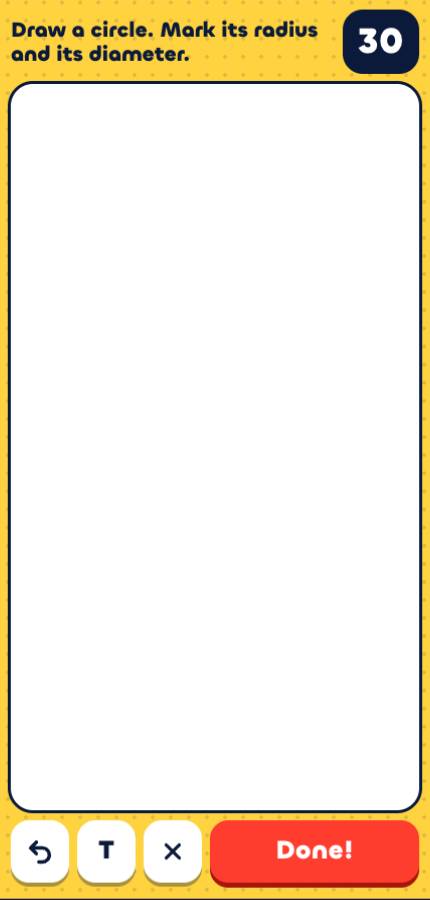
“I played it on my phone and it was a little hard… It needs that Lucidchart feel of clicking key elements and arranging them.”
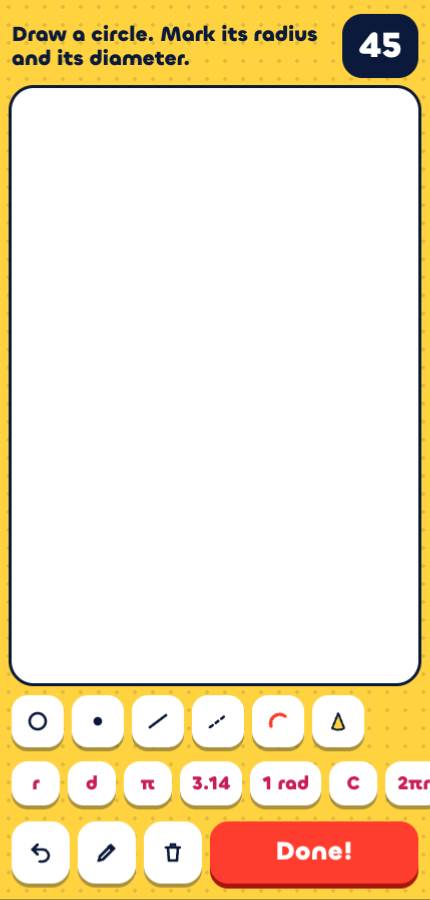
“I played it again. It’s still really hard to get right in my fingers… 30 seconds is just not a lot of time.”
Where I’m going, I don’t know yet. What I do know is that I want a really good understanding of how to build with AI, how to get the most out of it, and how to bring that back into the workplace.
AI is out of the box, and everyone is going to have to get used to it. It feels like the next electricity: we’re at the AI-ification of every industry, the way we once were at the electrification of every industry. That has its merits and its drawbacks, and it’s a lot scarier than electrification was. But it’s happening, so we need people who can align it, harness it and grow its uses.